WE CARE CHILD STUDY

@ Dronalayaa

A Montessori Inspired School

Dronalayaa is a nurturing space where children explore, discover, and grow. With Authentic Montessori learning and respectful guidance, we help children become confident, curious and independent.

Why Choose us

Our Core Values

At Dronalayaa, our core values are built upon deep respect for the child, their pace, their curiosity and their journey. Every decision we make, every environment we prepare and every interaction we offer reflects these core values.


Engaging and spacious school campus

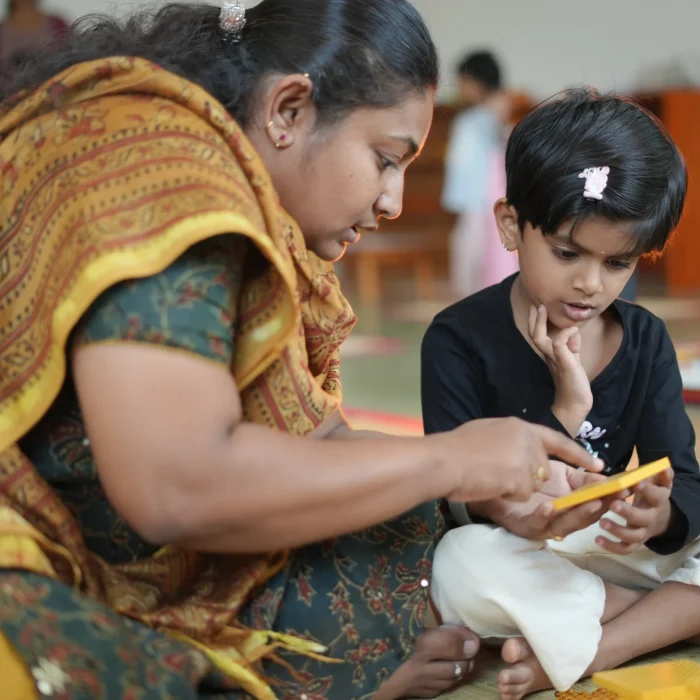
Authentic Montessori Working environment with trained adults

Healthy snacks

Transportation

Students
0 +
Trained Staffs
0 +

About Us

Who we are:

Dronalayaa A Montessori inspired school was started in the year 2025. It is intended to be a learning space which offers freedom to learn and explore one's own interest without the burden of being judged in any way. We aspire to grow into a free-thinking, progressive and child-centric community of parents, teachers and educators. Our educational approach is largely inspired by Dr.Maria Montessori's philosophy. While her methodology forms the bedrock of our approach, thinkers like J.Krishnamurti, John Holt and the likes influence our day to day efforts.

Best Learning

Torquent architecto proident sequi deserunt.

Nutritious Food

Torquent architecto proident sequi deserunt.

our programs

Our Best Classes

Eiusmod eget sem suscipit illo magni molestie nostrum conubia nostrud, porta consequatur dolor potenti pharetra nulla dictum illo primis.

Primary

(For children aged 2.5 years to 6 years)

Primary environments are carefully designed to meet the needs of the children of 2.5 to 6 years. An environment filled with exciting materials invite children to meaningful work. Children enjoy choosing their own activities, once they are introduced to the materials.


Class Fees:

$350.00 / Per Month

Preschool Programs

(Age: 2 - 3 Years)

Soluta platea irure rem tristique lorem nonummy fugit cras minim.

Class Fees:

$480.00 / Per Month

Kindergarten Class

(Age: 4 - 5 Years)

Soluta platea irure rem tristique lorem nonummy fugit cras minim.
Class Fees:

$550.00 / Per Month

our programs

Our Best Classes

Primary Class

(For children aged 2.5 years to 6 years)

Primary environments are carefully designed to meet the needs of the children of 2.5 to 6 years. An environment filled with exciting materials invite children to meaningful work. Children enjoy choosing their own activities, once they are introduced to the materials.

At Dronalayaa Montessori, we understand that the early years are a time of rapid language growth, curiosity, and emotional development. Children at this stage are eager to explore, ask questions, and make sense of the world around them.

Our carefully prepared Montessori environment offers meaningful learning experiences through hands-on materials, movement, and purposeful work. Children are encouraged to make choices, solve problems, and learn at their own pace — building independence and confidence.

We gently guide children through behavioural challenges such as emotional expression and tantrums while nurturing grace, courtesy, and respectful communication. Through engaging activities, children refine their senses, strengthen vocabulary, and build strong foundations in numeracy, language, culture, and practical life skills.

At Dronalayaa, learning is joyful, calm, and deeply enriching — helping each child grow socially, emotionally, and intellectually with balance and ease.

Practical life

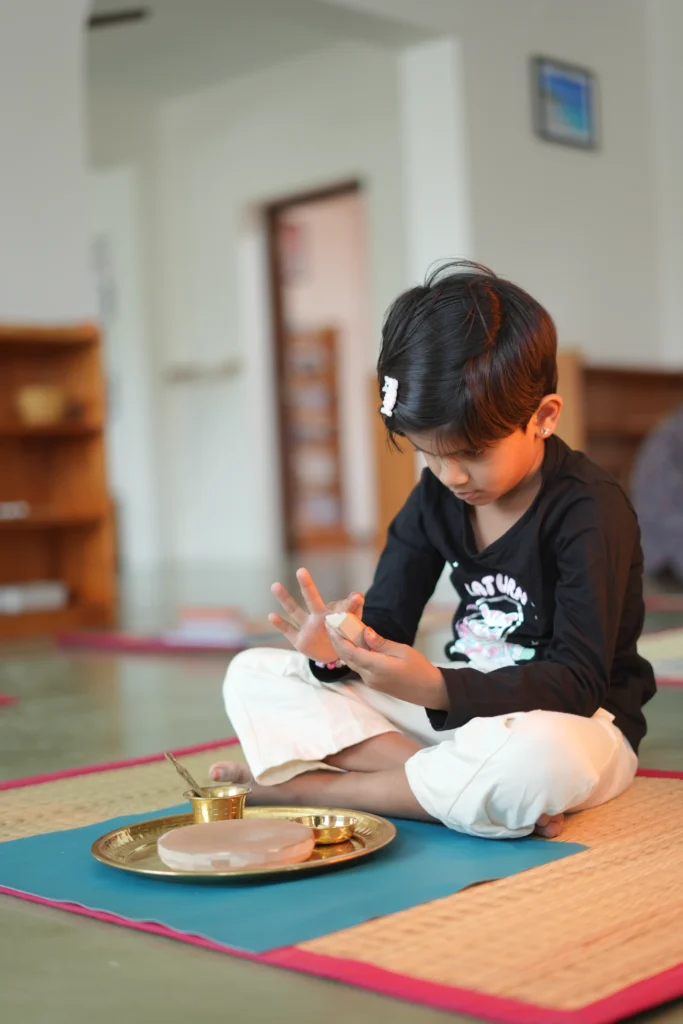
This area builds independence, concentration, coordination, and confidence through real-life activities such as pouring, cutting, transferring, dressing frames, and care of environment. Children learn responsibility and take pride in doing things for themselves.

Sensorial materials

Sensorial materials help children refine their senses and understand concepts like size, shape, colour, dimension, texture, sound, and temperature. These activities build the foundation for logical thinking, classification, and problem-solving.

Language Exercises

Through rich vocabulary exposure, phonetic awareness, storytelling, and writing experiences, children develop strong communication skills. Montessori materials gently guide children from spoken language to reading and writing with clarity and confidence.

Arithmetic experience

Hands-on materials allow children to see and feel mathematical concepts before moving to abstraction. Children explore numbers, quantities, sequencing, place value, and early operations through joyful exploration and repetition.

Culture

Cultural studies help children understand the world and their place within it. Geography, botany, zoology, history, and art spark curiosity, respect for diversity, and a deep connection to nature and global community.

Grace & Courtesy

Embedded across all areas, grace and courtesy teach children to communicate with kindness, respect, empathy, and mindfulness. These lessons help build peaceful relationships and a strong moral foundation.

Meet

Our Team

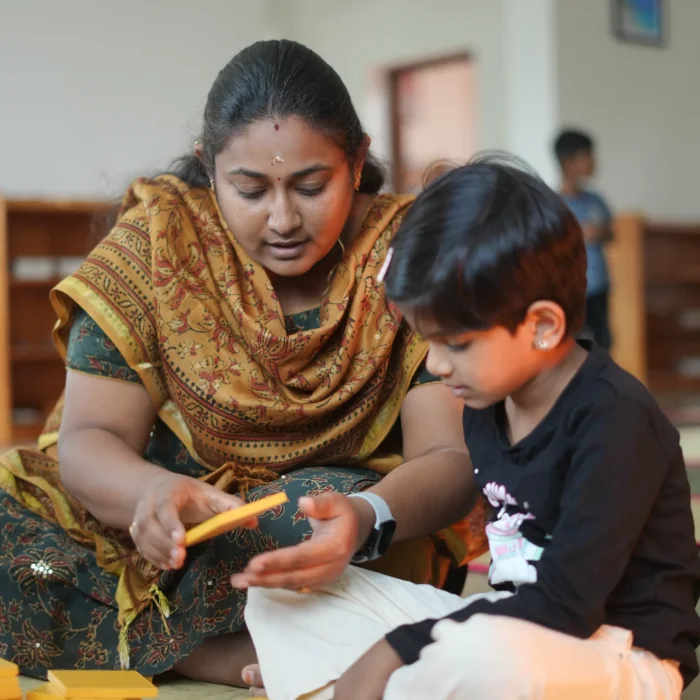
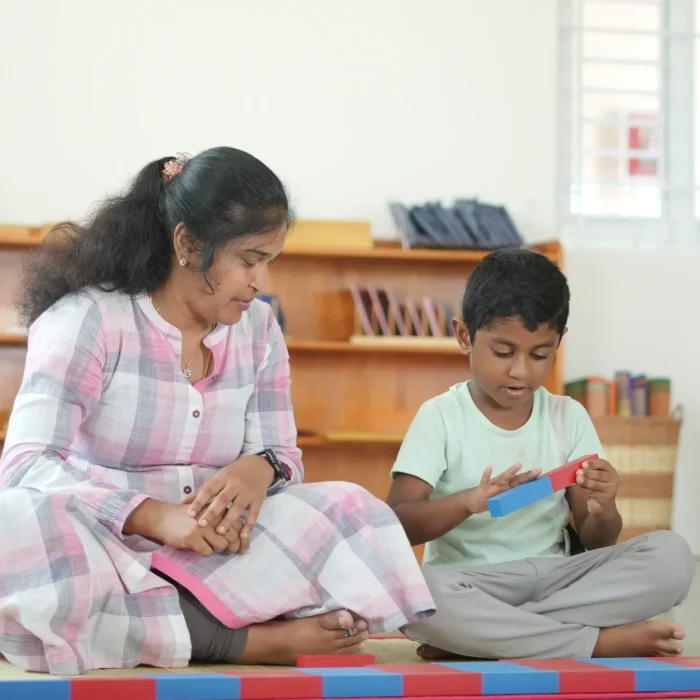
The team comprises of several individuals from various backgrounds. While some of them are trained in Montessori Methods, others undergo training on campus to ensure that they share the same philosophy as ours. We work as a team without hierarchy, each one taking up responsibilities in core areas of competence and also in other areas such as administration, teaching, etc. Most importantly, we as a team continuously strive to further our understanding of the human nature within ourselves to make ourselves worthy of the child.
Professional Teacher
0%
Artists
0%

Dianner Arlington

LITERACY TEACHER

Trisha Hyson

ACTIVE TEACHER

Kyla Wesley

PRESCHOOL TEACHER

Welma Jefferson

MUSIC TEACHER

recent blogs

Our News Insights

Eiusmod eget sem suscipit illo magni molestie nostrum conubia nostrud, porta consequatur dolor potenti pharetra nulla dictum illo primis.

Frequently Asked Questions

1. What is the difference between Playschool and Montessori School?

Playschools, with some rare exceptions, are generally conventional learning environments lined up with desks and chairs where a group of children are tutored a concept at the same time. It is a very structured program that expects children to learn concepts at the time decided by the adult. Children are mostly confined to their chairs and are tuned to following instructions from teachers. Montessori environment on the contrary sports no desks or chairs. It is lined up with learning materials that are attractive for the young minds. Children learn through work and collaboration. Repetition leads to mastery. Choice of work and time rests with students. Children grow to be independent learners. Get in touch with us to know more.  

2. When shifted to a traditional school, will children adapt to the new environment?

Montessori children acquire essential life skills at an early stage. These become part of their personality and lasts and manifests wherever they are. Montessori children tend to adapt to new environments quickly and also show positive tendency to learning new ways of acquiring skills. Their core remains unshaken and unaltered. However, it is wise for adults to give some time for the child to settle down in a new environment by not making high demands on them.

3. What syllabus is generally followed in Montessori Schools?

Montessori does not follow a set syllabus. However, the concepts that are " taught " in conventional schools are very much a part of the environment. But the question of how children learn these concepts vary to a great extent. Montessori environments are neither subjected to time limits for completing a syllabus nor are they limited by its scope. Exploration and discovery continues as long as there is interest and love for learning. Having said that, here at The Aalam, we ensure that we conform and fulfill the state requirements, if any.

4. How are children assessed? Are there rankings / grades and report cards?

Children are assessed day to day through careful observation by the adults. Their work is an everyday test. Children engage in variety of work that involves writing, experimenting, discussing, debating which forms the basis for observation. Records are maintained by the respective adults and are used as the basis for further presentation of concepts. Parents meet the school representative at least 2 - 3 times a year to discuss about the progress, the child is making in all spheres of development.  

5. After going through a Montessori school, will the child be able to face day to day challenges in the real world?

The answer is very much in the affirmative. Montessori children are best suited to face life with all its challenges and tribulations. They are confident, adaptable and always exhibit a positive spirit. They are tuned to keep trying until they reach the goal. No amount of failure can discourage them. At the same time, they also are ethically conscious in their actions and also put in efforts to make this world a better place to live.

6. Is it true that Montessori children start writing very late?

This is a general misconception that every other parent has. If forcing children to hold pencil and write by the time they turn 3 years is standard benchmark, then of course, Montessori children do start late. However, as a parent / adult one should understand what is " writing " before we venture into the discussing when children should start writing. Montessori environment does not set any age limit to begin writing. A lot of activities aim to strengthen their coordination skills and keep their hand ready for writing. Writing is a spontaneous activity for the child. It may happen early or late. But it will happen and when it happens, it happens with so much joy and love.

7. Are there uniforms and standard text books for reference?

No. There are no uniforms and textbooks. Reference and other story books are essential part of the environment.

8. Should we as parents, help children at home? If so what kind of help?

Yes and No. There are many ways in which parents can contribute to the well being and all round development of the child. Aligning the home environment, say by tweaking certain practices, brings more harmony in the child. Academic help can be given only when there is a thorough understanding of how it is done in the school. We generally request parents to restrain from helping children in the academic spheres esp. arithmetic and language as it may confuse them. However there are so many activities that can be implemented at home that would help channelize the energy more productively.

9. Can I visit your school along with my child to discuss admissions?

Mostly yes, unless there is an extraordinary situation. Children are given special help during the settling down period. This helps them integrate into the existing group.

10. What languages do you teach at school?

English is the language of the House of children. At the moment, we also offer Tamil.  

11. Can I visit your school along with my child to discuss admissions?

You are most welcome. We suggest that you get in touch with us to fix a mutually convenient time before you plan the visit. In your first visit we generally prefer that both parents come to understand the philosophy and the method in which it is implemented.